Advanced Digital Marketing Training
Become a Certified Digital Marketing Professional with Learningport Technologies Skills and master SEO, social media marketing, content strategy, paid advertising, analytics, email marketing, and digital marketing tools & frameworks
- Practical Learning
- Learn Industry Skills
- Industry Professional Led Sessions
- Paid Internship
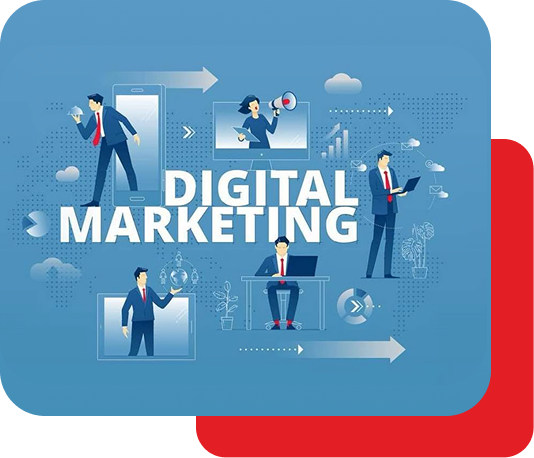
Advanced Digital Marketing Training
Become a Certified Digital Marketing Professional with Learningport Technologies Skills and master SEO, social media marketing, content strategy, paid advertising, analytics, email marketing, and digital marketing tools & frameworks
- Practical Learning
- Learn Industry Skills
- Industry Professional Led Sessions
- Paid Internship
Learners’ Advantages

LMS Portal Access
Access course materials, updates, and resources anytime, anywhere with our lifetime LMS access.

Paid Internship
Every student is offered a paid internship after course completion to build hands-on skills
1:1 Mentorship
Personalized one-on-one mentorship to guide your learning journey and career growth.

Career Guidance
Focused on career direction and growth with mentorship from industry experts throughout your journey.

24*7 Support
Round-the-clock 24/7 support to assist you whenever you need help, anytime anywhere.

Portfolio Building
Build a strong professional portfolio with real-time projects to showcase your expertise.

Interactive Live Training
Engage in real-time learning with interactive live classes led by experienced professionals.

Practical Assignments
Apply your learning through regular hands-on assignments based on real-world use cases.
Digital Marketing Course Curriculum
Module 1: Introduction to Digital Marketing
- What is digital marketing?
- Importance of digital marketing in today’s world
- Traditional marketing vs digital marketing
- Core channels of digital marketing
- Key terms and concepts
- Career opportunities in digital marketing
Module 2: Website Planning & Development
- Importance of having a website
- Basics of domain and hosting
- CMS platforms (WordPress, Wix, Shopify)
- Creating responsive websites
- SEO-friendly website structure
- Website performance tracking
Module 3: Search Engine Optimization (SEO)
- Introduction to SEO and its importance
- On-page SEO techniques
- Off-page SEO and link building
- Technical SEO fundamentals
- Local SEO strategies
- SEO tools (Google Search Console, SEMrush)
Module 4: Search Engine Marketing (SEM)
- Basics of paid advertising
- Google Ads account setup
- Keyword research for SEM
- Campaign types (Search, Display, Shopping, Video)
- Bidding and budgeting strategies
- Measuring SEM performance with KPIs
Module 5: Social Media Marketing (SMM)
- Introduction to social media platforms
- Creating social media strategy
- Paid advertising on Facebook & Instagram
- LinkedIn and Twitter marketing
- Social media engagement techniques
- Analytics and performance tracking
Module 6: Content Marketing
- Importance of content in digital marketing
- Types of content (blogs, videos, infographics)
- Content creation tools & strategies
- Storytelling and brand voice
- Content distribution channels
- Measuring content performance
Module 7: Email Marketing
- Introduction to email marketing
- Building email lists ethically
- Email campaign design best practices
- Personalization and segmentation
- Tools for email marketing (Mailchimp, HubSpot)
- Analyzing email campaign metrics
Module 8: Web Analytics
- Importance of web analytics
- Introduction to Google Analytics
- Setting up tracking codes
- Understanding audience behavior
- Conversion tracking and goals
- Creating reports and dashboards
Module 9: Mobile Marketing
- Mobile-first marketing approach
- SMS and push notifications
- Mobile app marketing strategies
- In-app advertising
- Location-based marketing
- Mobile analytics and tracking
Module 10: Affiliate & Influencer Marketing
- Basics of affiliate marketing
- Setting up affiliate programs
- Tools and networks for affiliates
- Introduction to influencer marketing
- Selecting and managing influencers
- ROI measurement in affiliate campaigns
Module 11: Online Reputation Management (ORM)
- Importance of brand reputation online
- Handling negative reviews & feedback
- Social listening tools
- Creating a positive brand image
- Crisis management strategies
- ORM best practices
Module 12: Career & Portfolio Development
- Building a personal brand in digital marketing
- Creating a digital marketing portfolio
- Showcasing real-world projects and case studies
- Preparing for job interviews
- Freelancing and entrepreneurship in digital marketing
- Continuous learning and certifications
Let Us Worry About Your Job While You Focus On Your Skills
- Live Doubt Clearing Sessions
- Weekly Group/Individual Projects
- 1:1 Mentorship
- Monthly Webinars with Industry Leaders
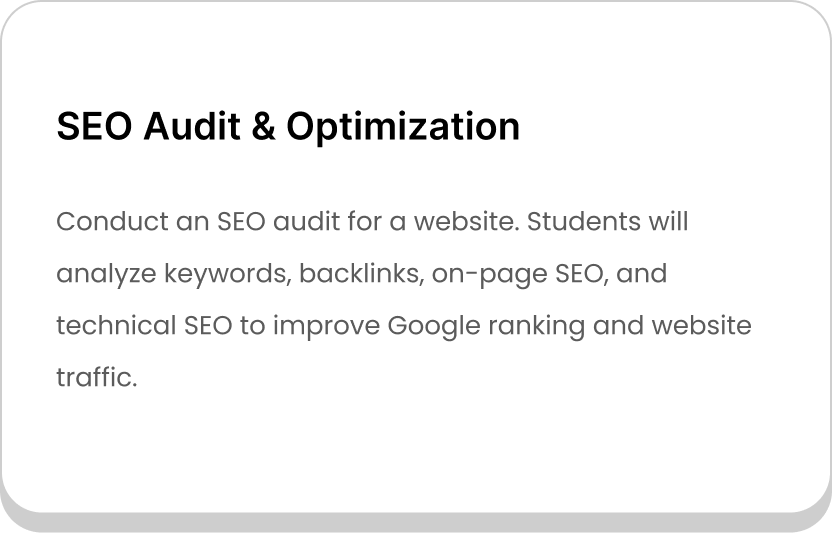
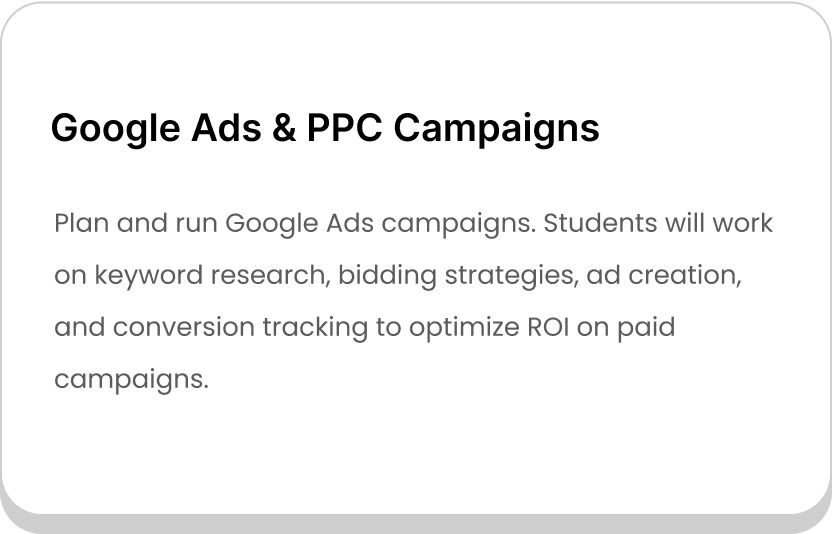
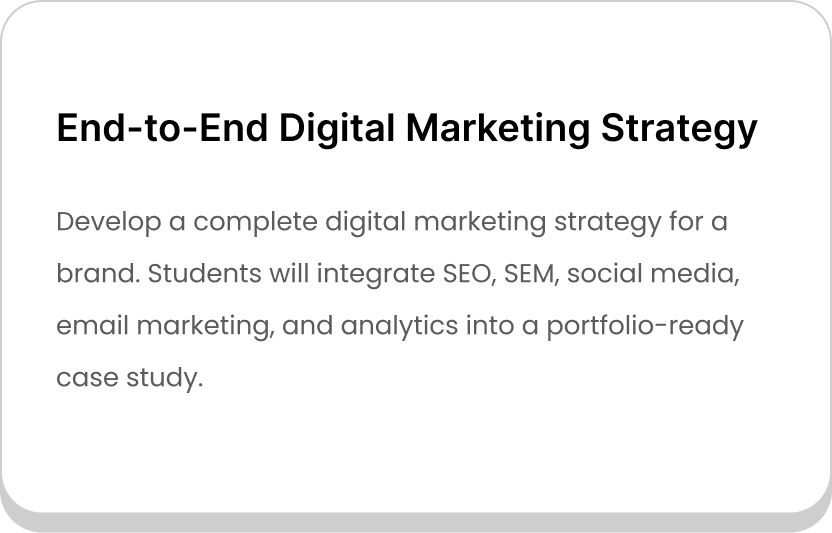
Build a Job-worthy Project-Portfolio
Gain hands-on experience with modern digital marketing tools that will equip you with the essential skills needed to succeed in today’s competitive marketing landscape
Learner Benefits

World-Class Pedagogy
World-class pedagogy combines innovative teaching methods, practical learning, and global best practices to ensure students gain in-depth knowledge, critical thinking skills, and real-world expertise for career excellence.

4.9/5 Rating

Practical Learning
24*7 Support

1:1 Mentorship

1000+ Career Transition

100+ Hiring Patners

Career Assistance

Personalized Guidance
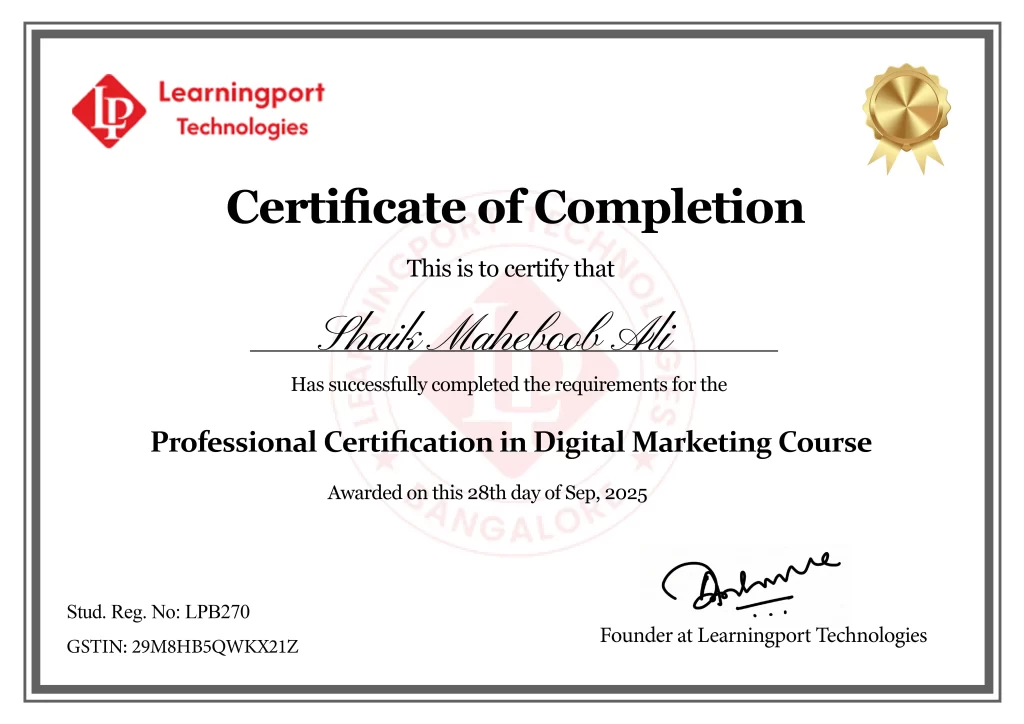
Get Professional Certificate
Upskill Your Knowledge To Change Your Career Trajectory
- Gain official proof of your expertise from a trusted institution, increasing your value in the eyes of employers and clients.
- Stand out in competitive job markets and unlock better job roles, promotions, or freelance opportunities.
- Certifications ensure your skills are aligned with current industry standards, making you job-ready from day one.
- Completing a certified course strengthens your belief in your capabilities and readiness to tackle real-world challenges.
- Join a professional community, gain access to hiring managers, and receive support from placement partners and mentors.
Get in touch
Our programs combine real-world projects, expert mentorship, and globally recognized certifications. empowering you to launch and grow your career in the cloud and beyond
Land Your Dream Job Like Our Alumni
FAQ's On This Course
Digital marketing is the practice of promoting products, services, or brands using online platforms such as search engines, social media, websites, email, and mobile applications. It helps businesses reach targeted audiences, generate leads, increase sales, and build brand awareness in a measurable, cost-effective, and data-driven way.
Digital marketing is essential because most consumers spend significant time online. It allows businesses to reach global audiences at lower costs compared to traditional marketing. With measurable analytics, segmentation, and personalization, companies can optimize strategies, increase conversions, and stay competitive in fast-changing markets.
Key skills include SEO, SEM, content marketing, social media management, email marketing, web analytics, copywriting, and campaign optimization. Soft skills like communication, creativity, data analysis, and adaptability are equally important. Proficiency in tools such as Google Analytics, Ads Manager, and CMS platforms enhances effectiveness.
SEO (Search Engine Optimization) improves website visibility on search engines by optimizing content, structure, and backlinks. It helps drive organic traffic, enhances brand credibility, and ensures long-term growth. Effective SEO involves keyword research, on-page optimization, link building, technical improvements, and continuous performance monitoring.
SEM (Search Engine Marketing) involves paid advertising campaigns on search engines like Google. It ensures immediate visibility, attracts targeted leads, and complements SEO efforts. With keyword bidding, budget control, and measurable results, SEM is crucial for businesses seeking fast, trackable growth and higher conversions.
Social media marketing promotes products and services on platforms like Facebook, Instagram, LinkedIn, and Twitter. It includes organic posting, paid ads, community engagement, and influencer partnerships. Businesses use it to boost visibility, drive traffic, build relationships, and analyze performance with metrics like reach and engagement.
Yes, we offer weekend batches for students and professionals with tight schedules.
Content marketing focuses on creating and distributing valuable, relevant, and consistent content to attract, engage, and retain audiences. It involves blogs, videos, podcasts, infographics, and case studies. By addressing customer needs, content builds trust, nurtures leads, and improves search rankings while supporting long-term marketing goals.
We offer both online live classes and offline classroom sessions.
Yes, our placement team assists with resume building, interviews, and connecting students to IT companies.
Mobile marketing targets audiences through mobile devices using SMS, push notifications, apps, and mobile ads. It focuses on delivering personalized, location-based content to boost engagement. With mobile-first strategies, businesses reach users anytime, anywhere, making it essential in today’s smartphone-driven, always-connected consumer environment.
Influencer marketing partners brands with social media personalities or industry experts who promote products authentically to their followers. It boosts trust, brand awareness, and conversions. By leveraging influencers’ credibility and reach, businesses can tap into engaged communities and enhance their marketing impact cost-effectively.
ORM ensures a business maintains a positive online image by monitoring mentions, reviews, and social media interactions. It includes responding to feedback, addressing negative content, and promoting positive news. Strong ORM builds trust, improves brand perception, and helps maintain customer loyalty and credibility.
PPC (Pay-Per-Click) is a model where advertisers pay each time their ad is clicked. Platforms like Google Ads and Bing Ads allow targeted campaigns. PPC delivers fast results, high visibility, measurable ROI, and is ideal for businesses seeking quick traffic growth.
What Our Learners Have To Say
EXCELLENT Based on 202 reviews
 Posted on Google
 hari prasadBest place to learn cloud,I done window VMware and AzurePosted on Google
 Shivananda BhavikattiWorking at LearningPort Technology has been a great experience. The company offers a supportive work environment, good learning opportunities, and a team that is always helpful and cooperative. I’ve been able to improve my skills, gain real project experience, and grow professionally. The management is approachable, and the overall work culture is positive and motivating. I’m proud to be a part of LearningPort Technology and would definitely recommend it to others.Posted on Google
 Amu RajaI'm incredibly impressed with expert trainers, great materials and hands-on practice with Windows, VMware and Azure where mentor assisting me to crack an interview as well. Highly recommend for practical cloud training..Posted on Google
 MD YaseenWindows server training, practical, real-time learning and good trainer support company's commitment to helping students secure placements.Posted on Google
 Noor AhamedExcellentPosted on Google
 Ashraf_ Ayodhi.Best' traning institute i learn MCSA and VMware Good mentor and friendly naturePosted on Google
 Rohit MunavalliLearningPort’s corporate trainer made complex topics simple with real-life examples. The sessions were interactive, and I gained confidence to apply the skills in my current job. Highly recommend for working professionals!